
FAPI, developed by the OpenID Foundation’s FAPI Working Group, is a set of security profiles built on OAuth 2.0 and OpenID Connect (OIDC) and designed to provide a consistent, high-assurance framework for API security.
FAPI tells you: “If you’re going to issue tokens for valuable data or high-impact operations, here’s how to do it safely and consistently across different systems.”
Originally created to support Open Banking initiatives and known as simply the “Financial API,” FAPI has evolved quickly. With the release of FAPI 2.0, the specification now addresses not just financial use cases but also secure API auth for a wide variety of use cases and industries, including healthcare, digital ID, and government data exchange systems.
FAPI 2.0 has become a general-purpose security profile for building high-assurance OAuth 2.0 and OpenID Connect systems.
If you’re a developer diving into the implementation details of FAPI, it can be challenging to understand the FAPI landscape and how to best implement what’s needed for your specific use case.
In this article, we’ll try to help. We’ll explore the major versions of FAPI and their differences. We’ll look at which version is right for your use case. And we’ll explore how you can use Authlete to help streamline your implementation.
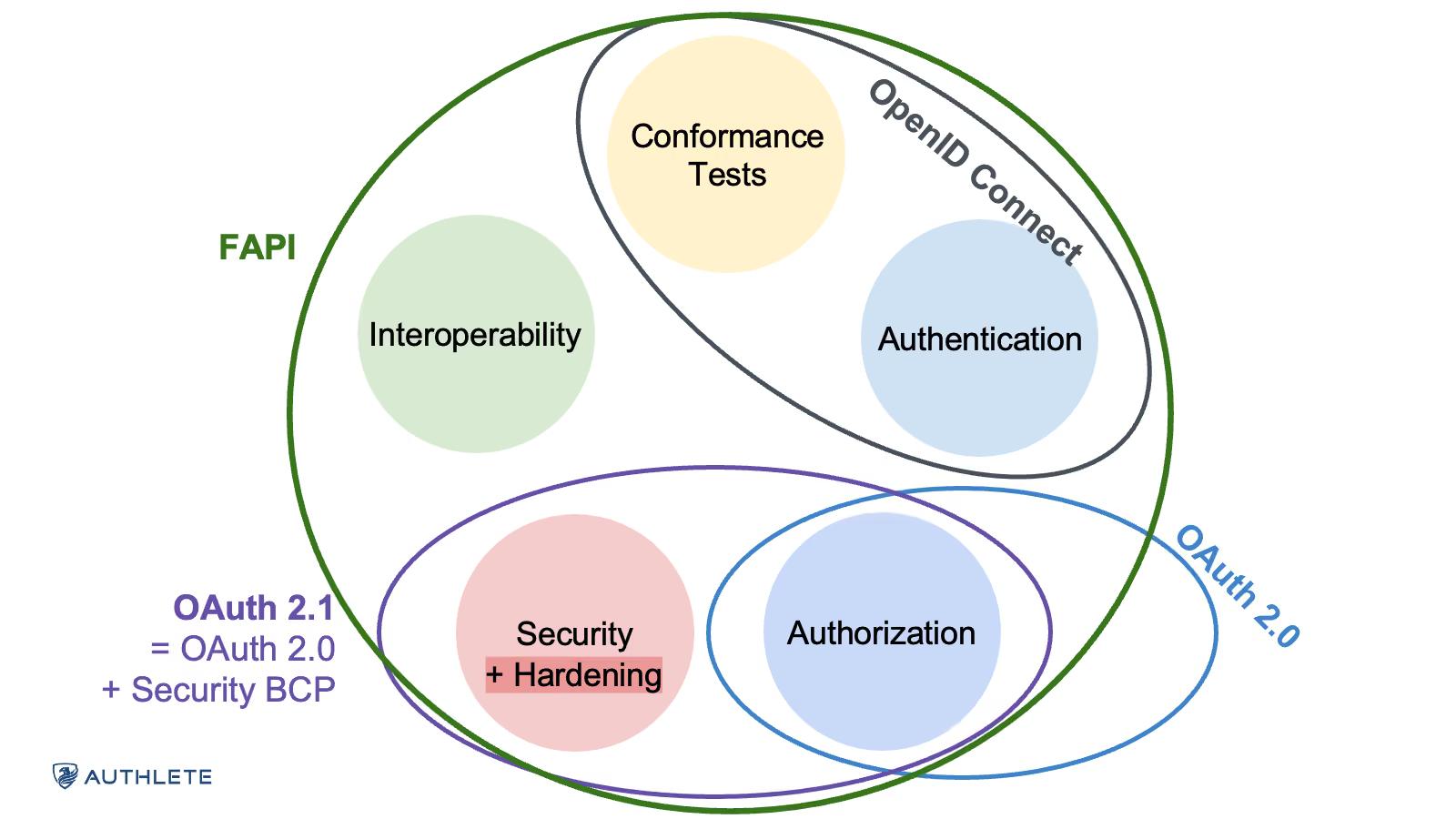
There are two major FAPI versions: FAPI 1.0 and FAPI 2.0. Both versions are actively supported and in use.
The 1.0 FAPI specification was finalized in March 2021 and has been widely adopted, including by many organizations that have certified FAPI conformance to specific profiles for use cases such as Open Banking, Australia Consumer Data Right (CDR), and Open Insurance. FAPI 1.0 introduced “Baseline” and “Advanced” security profiles and standardized request signing, client authentication, and token handling.
But 1.0 has limits. It was designed with financial APIs in mind, and it left each ecosystem to pick its subsets of requirements. The flexibility was useful, but the lack of newer primitives like Pushed Authorization Requests (PAR) or Demonstrating Proof-of-Possession (DPoP) meant FAPI 1.0 leaned heavily on specific validation/processing logic, which quickly became complex.
As a result, FAPI 2.0 was created.
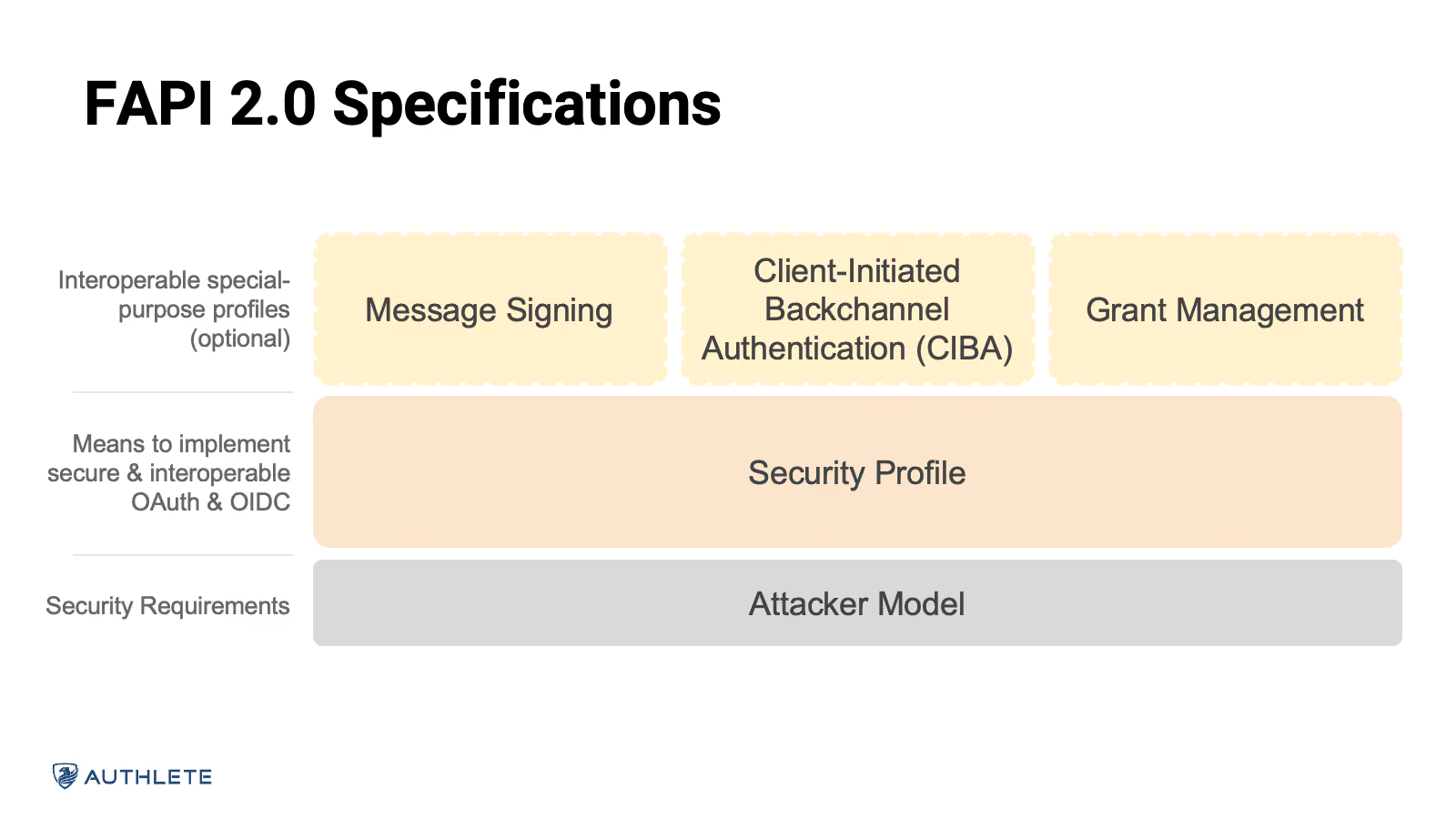
With 2.0, FAPI is a general “FAPI Security Profile,” not just a financial API specification. FAPI 2.0 fixes the problems of FAPI 1.0, improves usability, and adopts the OAuth 2.0 Security Best Current Practice. The 2.0 specs include an Attacker Model and a Security Profile, plus additional profiles that cover more specialized needs.
FAPI 1.0 isn’t going away. The FAPI Working Group has said it will be supported for the foreseeable future. But it’s essentially feature-complete.
If you’re starting a new project and have no restrictions, FAPI 2.0 is generally the better release to use.
FAPI 2.0 builds on lessons learned from FAPI 1.0, is easier to use, and is broader in scope than 1.0. It provides a high-assurance framework built on OAuth 2.0 and OIDC to ensure consistent authentication and authorization across different ecosystems.
Specific benefits of FAPI 2.0 include:
So when would you still use FAPI 1.0? When your systems force you to: an existing Open Banking implementation, a vendor that only supports 1.0, or a legacy system that is too expensive to migrate.
Let’s next look in more detail at the FAPI 2.0 specifications.
FAPI 2.0 is built around two core documents: the Attacker Model and the Security Profile. Everything else (message signing, grant management, Client-Initiated Backchannel Authentication [CIBA]) is layered on top of these.
The Attacker Model defines the bad actors you should assume exist. It’s not a full threat model, but it gives you the raw material to build one.
The Attacker Model specification defines six different types of attackers:
The point of the Attacker Model is to make the Security Profile concrete. Instead of a generic “be secure” language, the profile must defend against these specific attackers.
The FAPI 2.0 Security Profile defines the “you must” and the “you must not” statements.
At a high level, the Security Profile defines requirements for:
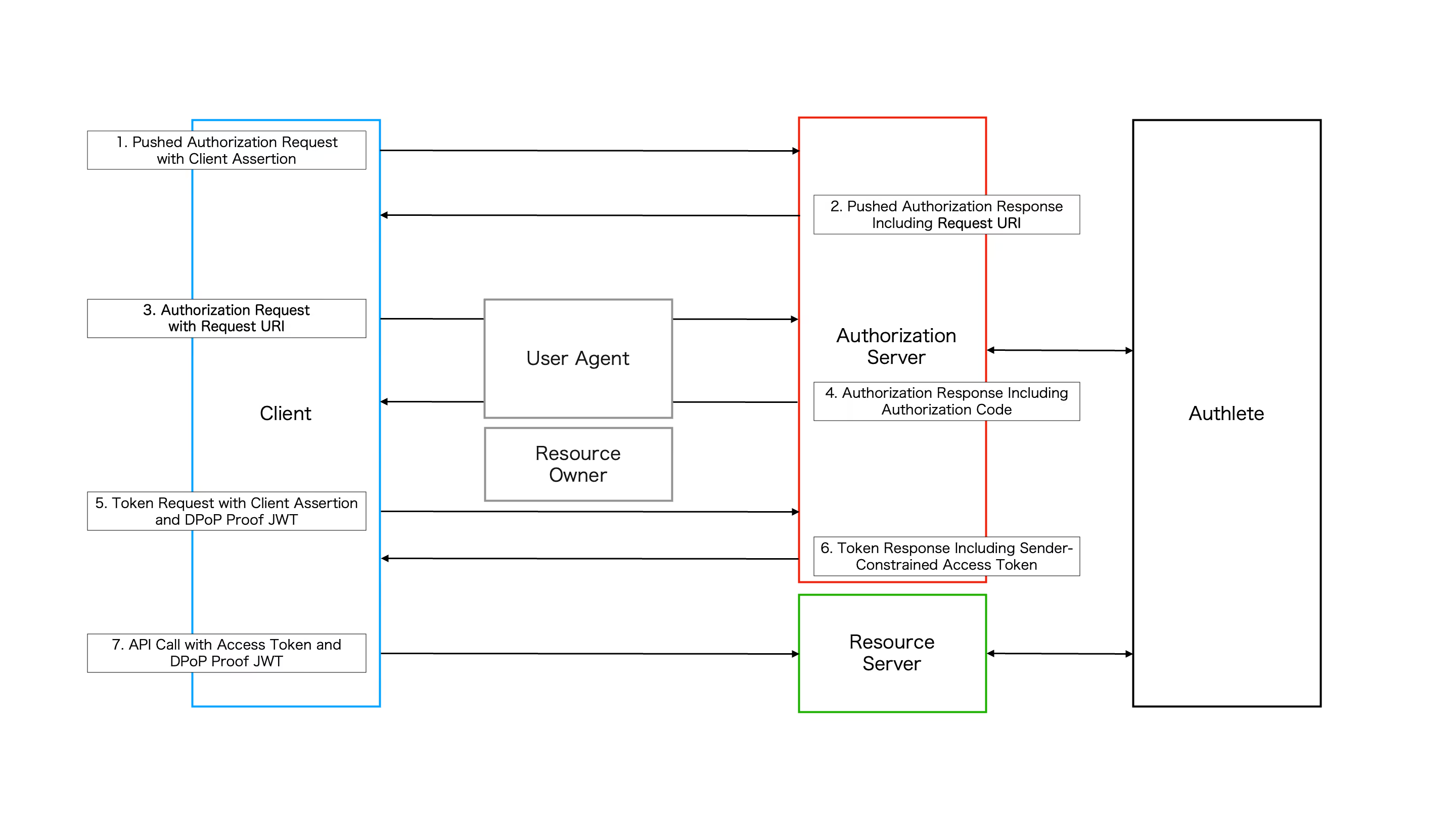
FAPI 2.0 makes several changes to FAPI 1.0’s “Part 2: Advanced” specification. It uses DPoP as a first-class option for sender-constrained tokens, uses PAR (rather than pure JAR) to protect authorization requests and make them more interoperable, removes some front-channel ID token patterns, and streamlines redirect URI and client authentication handling.
In addition to the Attacker Model and Security Profile, FAPI 2.0 supports several optional profiles that can help developers address specific use cases. These aren’t required for basic FAPI 2.0 compliance, but they’re powerful options when your needs go beyond standard flows.
FAPI sounds great in theory, but implementation can be difficult and a lot of work.
To be successful, you need to understand OAuth and OIDC in depth, keep track of the evolving specs, implement PAR, JARM, JWK and JWKS handling, mTLS and/or DPoP, dynamic client registration, robust token validation, and the FAPI-specific rules. Then you need to pass conformance tests and remember to keep the implementation up to date.
Authlete makes this all easy.
Authlete is a developer-centric, headless OAuth 2.0/OIDC engine. You don’t deploy Authlete as a full “login page” or standalone Identity Provider (IdP). Instead, you integrate it into your services and gateways. Your applications, gateways, or API management layers call Authlete’s APIs to:
You keep control of the user experience: login UIs, consent screens, branding, and API behavior. Authlete handles the protocol-heavy work and the details of FAPI compliance.
The end result is an architecture where:
FAPI has grown from the niche “financial API” into a general-purpose security framework. The Attacker Model makes the threat landscape explicit. The Security Profile turns those threats into concrete requirements on TLS, authorization servers, clients, and resource servers.
Implementing FAPI by hand is possible, but costly. Authlete gives you a way to offload that work to a dedicated engine while keeping control over your UX, APIs, and infrastructure. For many teams, that may be the difference between “looking at FAPI someday” and “we’re running a FAPI 2.0-compliant system in production.”
If you’re an existing Authlete user and want to get started using FAPI, check out the FAPI 2.0 overview. If you’re new to Authlete and want to see how simple FAPI-compliant auth implementations can be, sign up for a free (no credit card required) trial.

.avif)